





HOA Stealth Flagpole Antenna · 160-6M · No Radials · Made in USA
The DXF24 — Every Band, and Four More Feet for the Low Ones.
The DXF24 works every band, 160 through 6, from a single feedpoint with no radials and no ground system — that is the headline. The four extra feet over the 20-footer pay most where every backyard vertical is short: 40, 80, and 160. And it still reads as a standard residential flagpole, with HOA documentation in the box.
Modeled gain: in NEC modeling over average ground, the 24-foot runs ahead of a textbook quarter-wave on full buried radials across 30 through 10 meters — strongest on 10 and 12, about +3.5 dBi — and works every band below. How height pays →
Why a Flagpole Antenna?
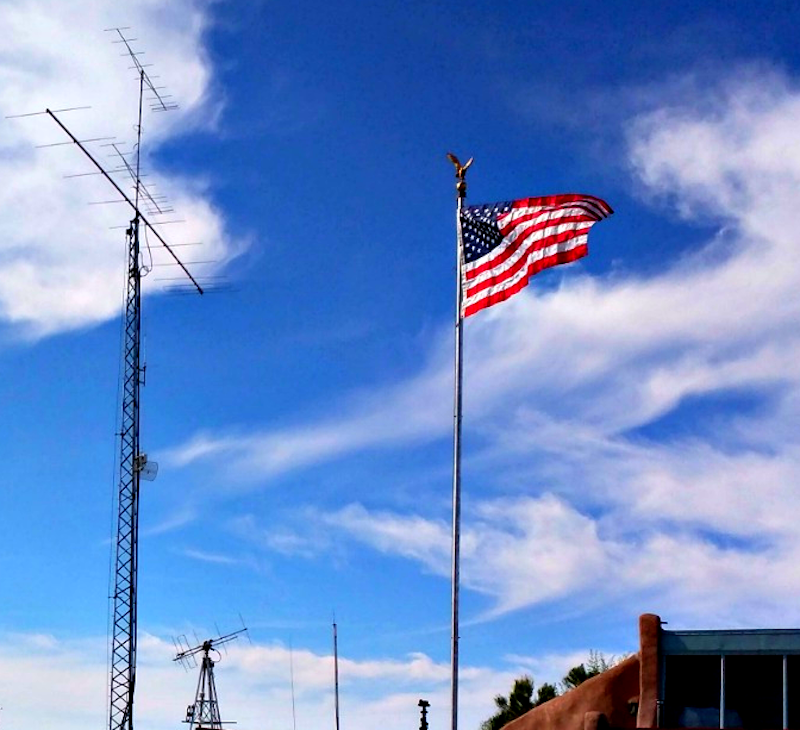
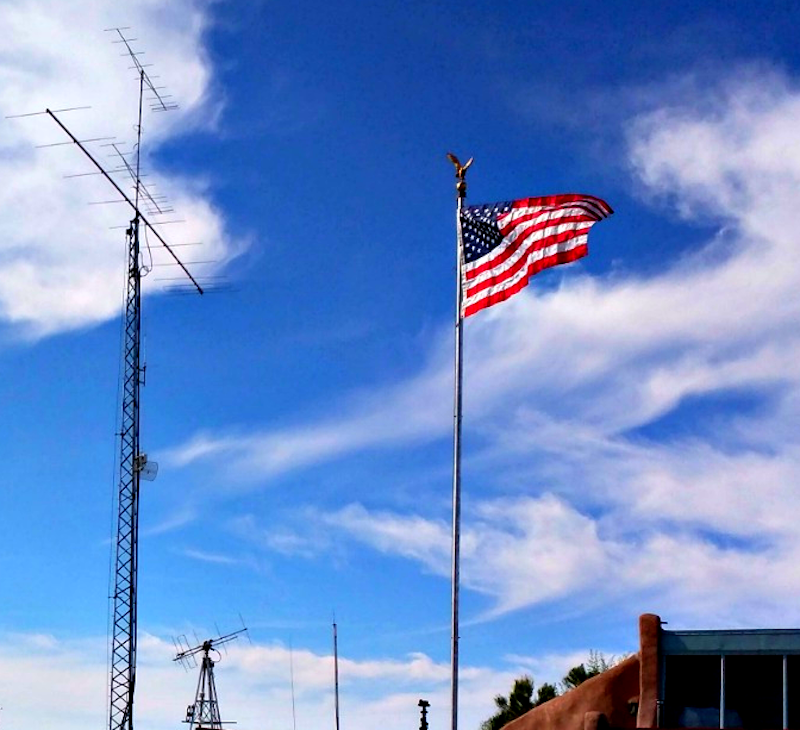
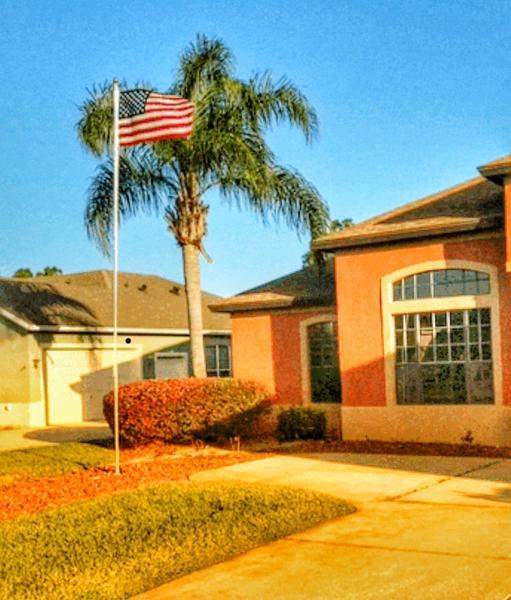
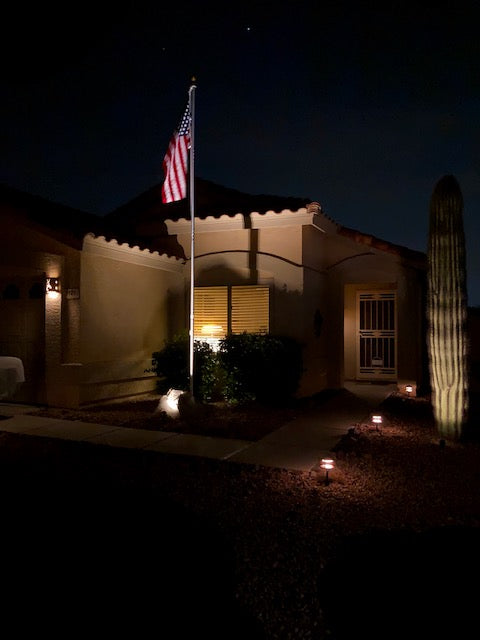
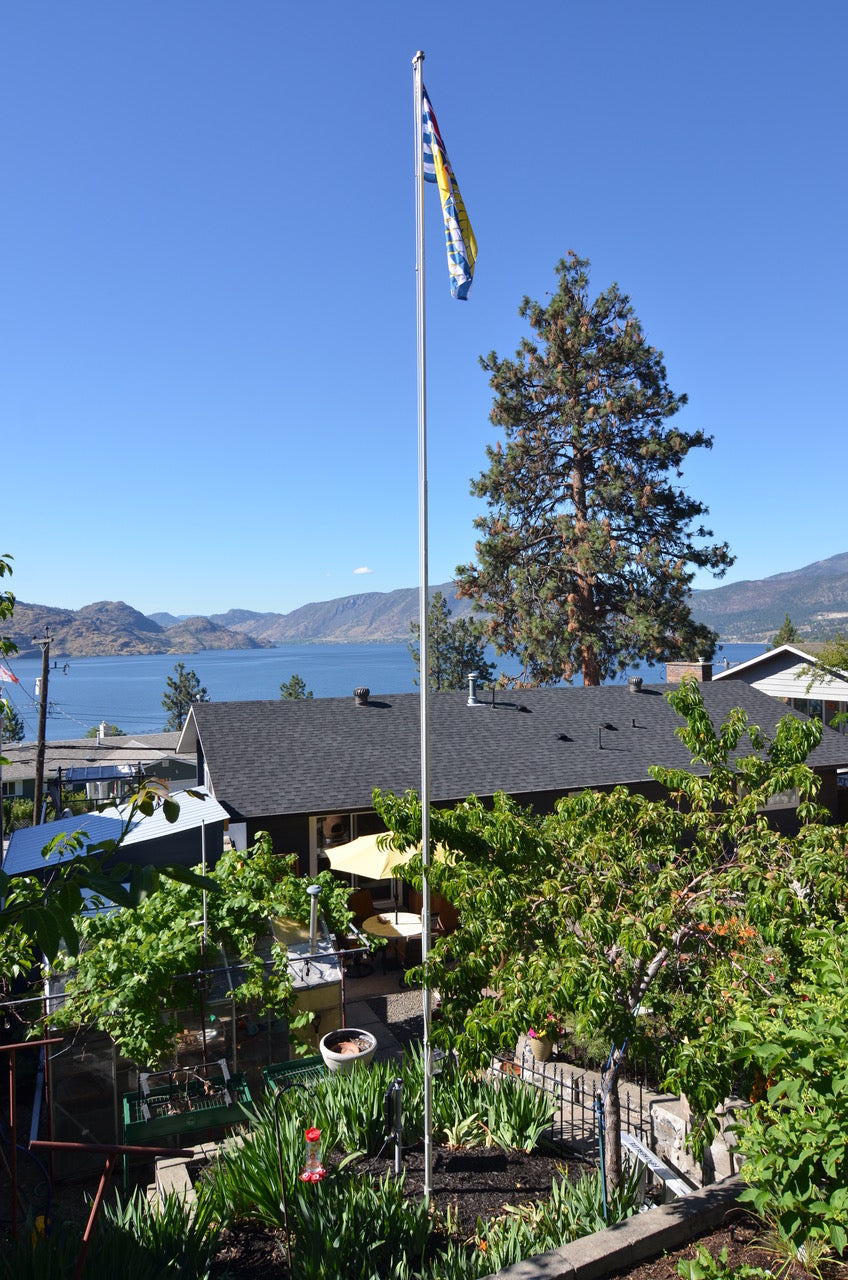
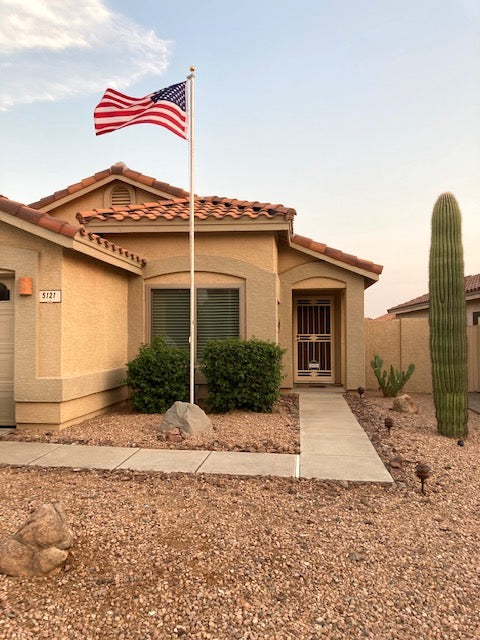
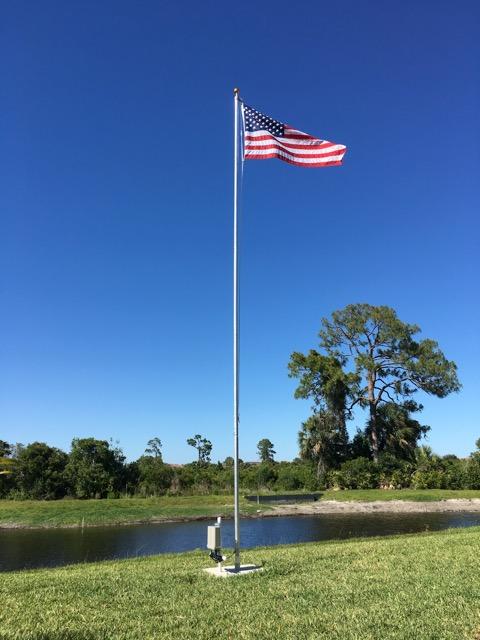
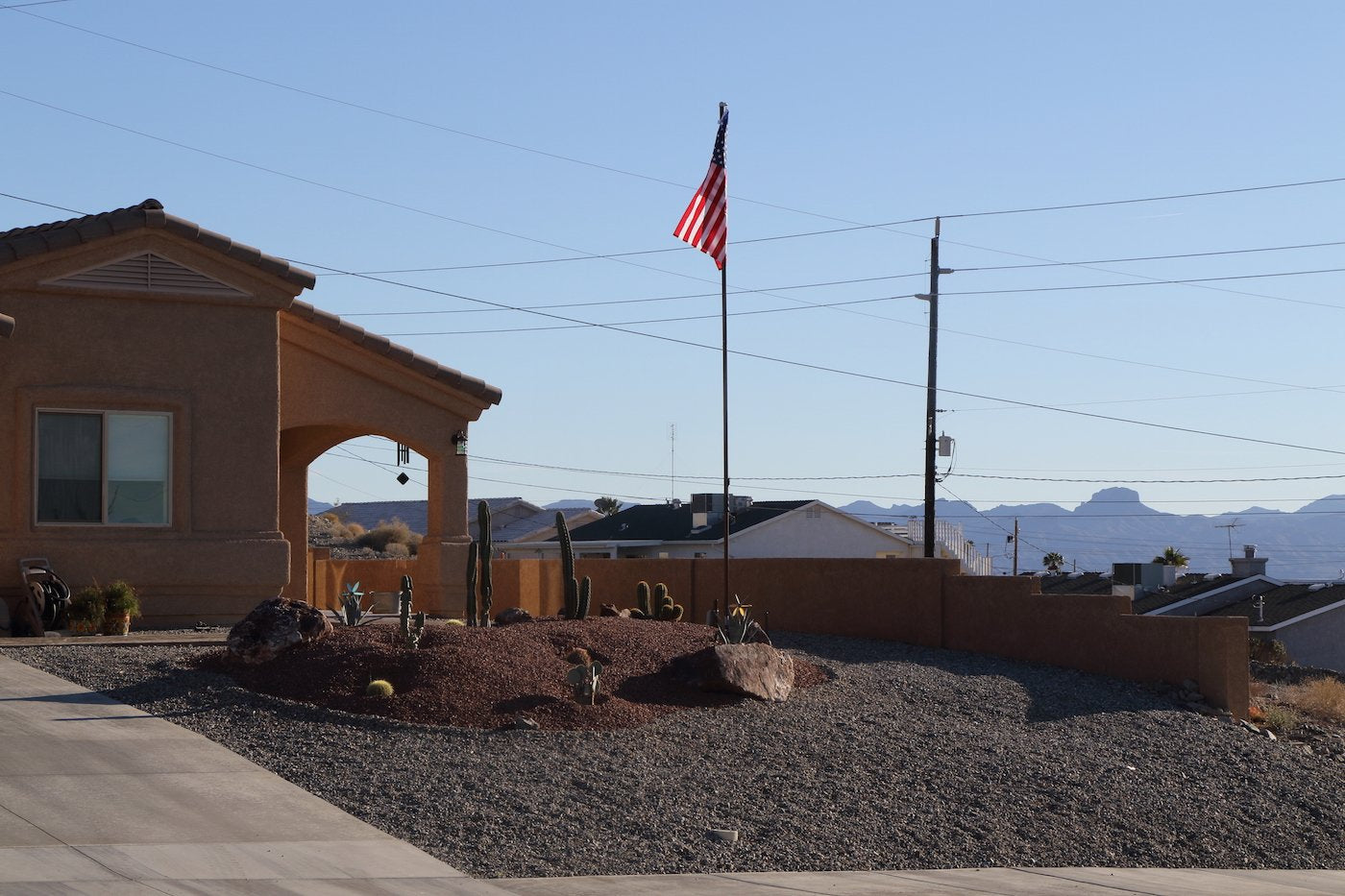
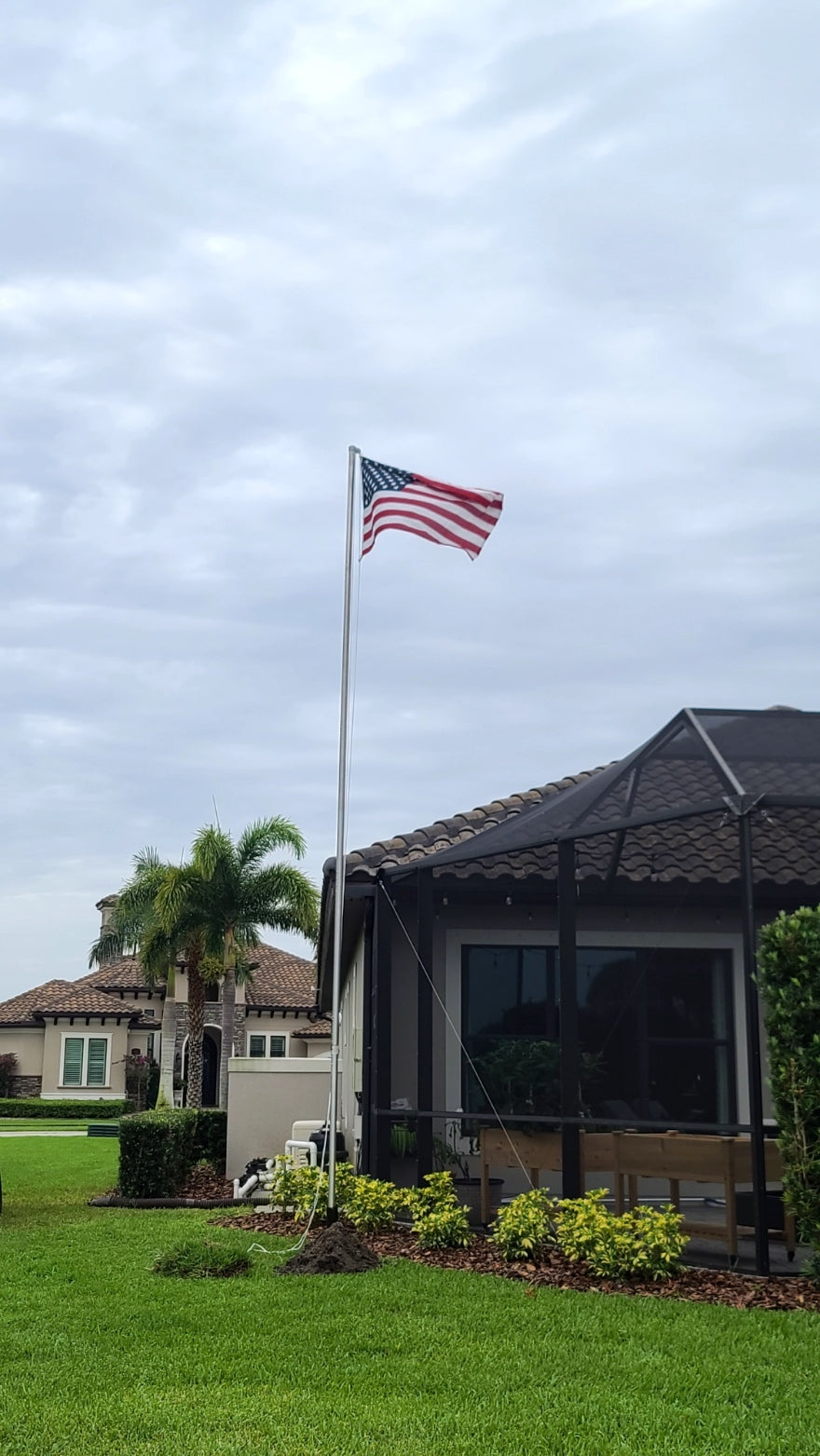
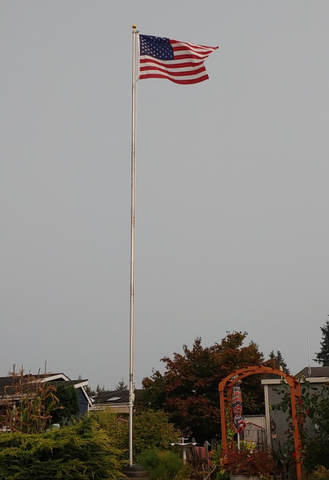
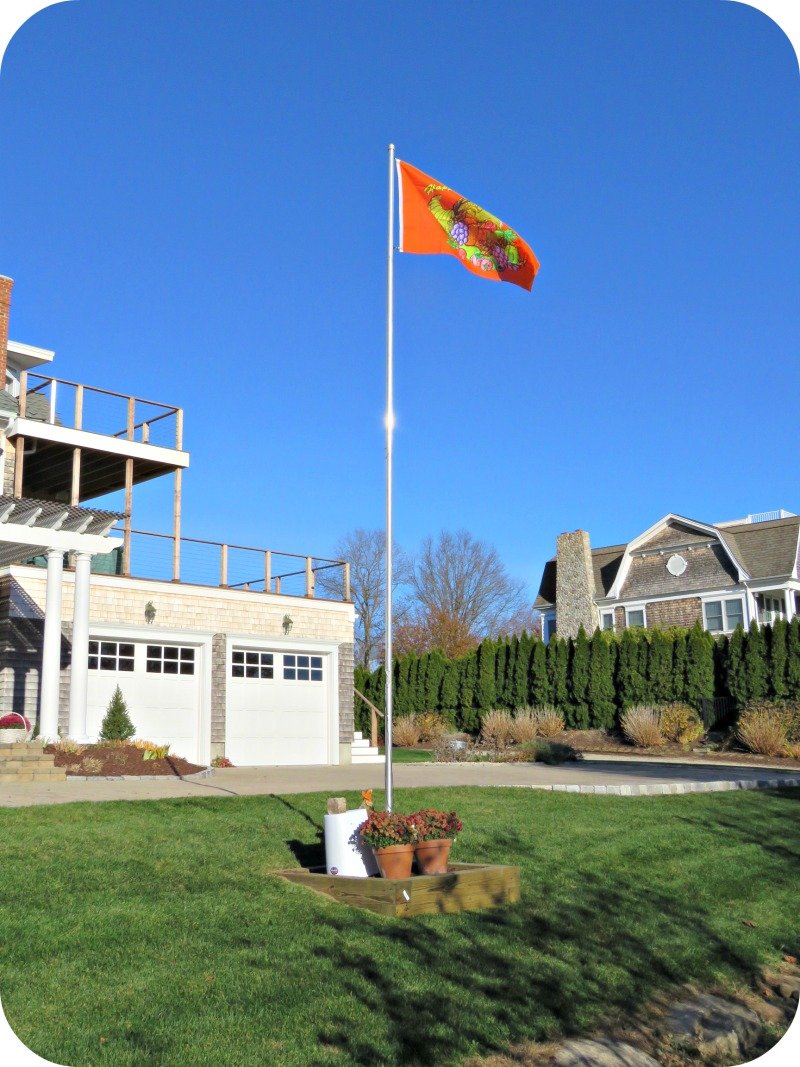
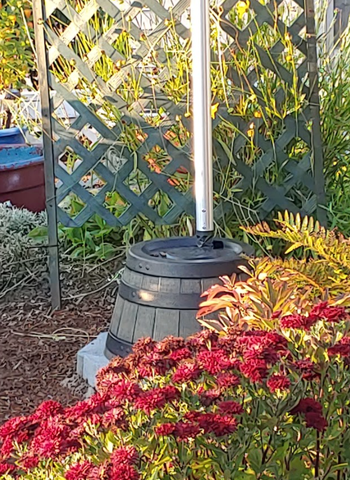
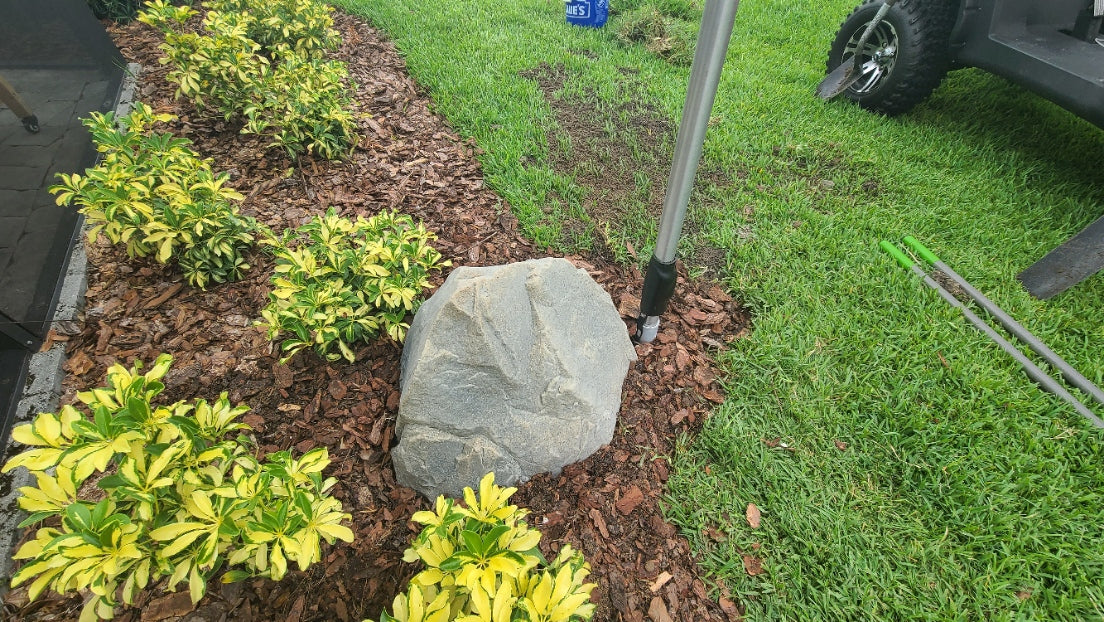
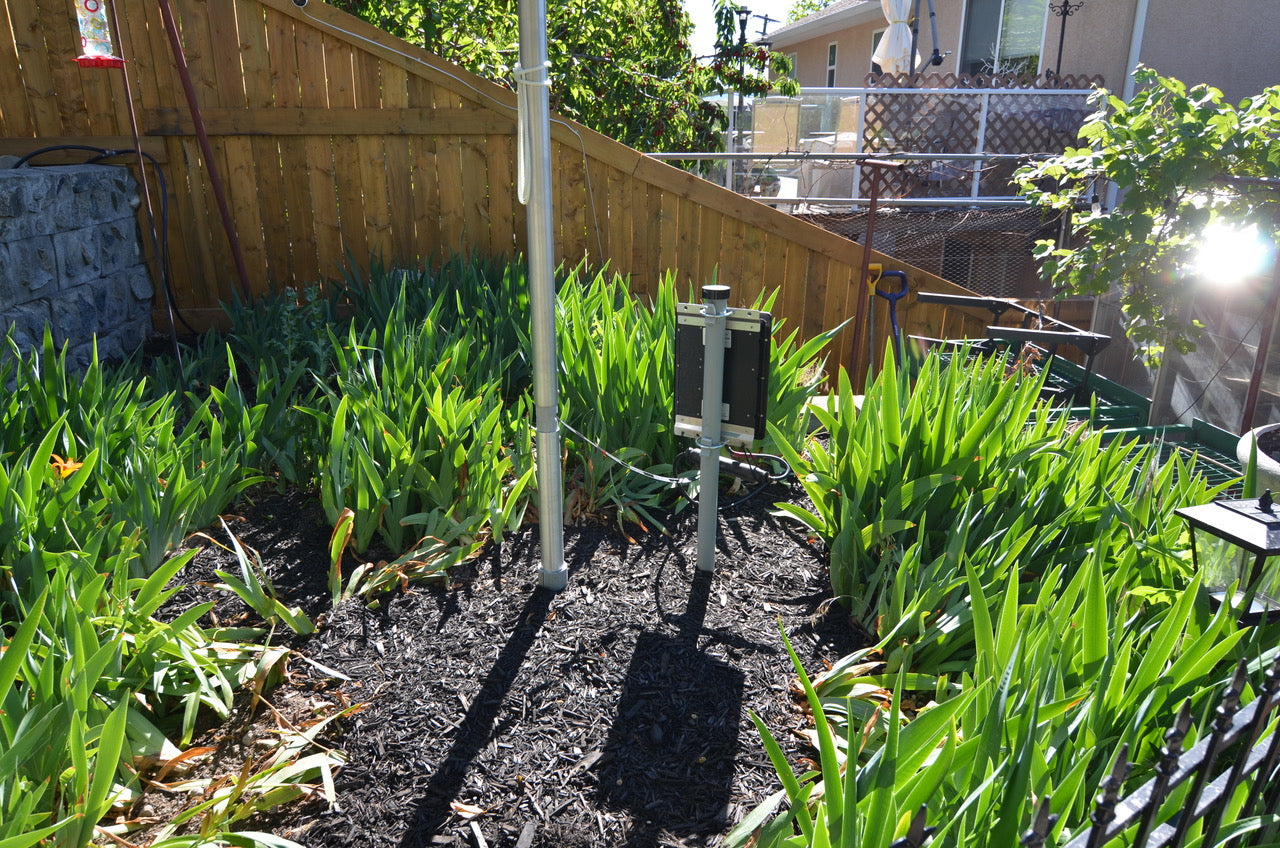
Most HOA CC&Rs explicitly permit residential flagpoles. On a DXF, the pole itself is the antenna, so there is nothing added to see — no stubs, no loading coils, no radial wires. From the street, it is a flagpole. A handsome one.
Field Report — HOA Golf Course Community
ARRL 160M Contest: 61 QSOs, 23 sections, 750 to 1,000 miles on 1.8 MHz. Runs contests at legal limit on 40-10M. "Going from the 20 ft to the 24 ft antenna made a very big difference."
— Bill · K3WA · PVRC President · 24' DXF · Verified Owner
Independent Assessment — Defense Antenna Executive
"I ran a defense antenna company for 7 years. I am very impressed with the look, quality, machining, and part fit. It is a professional-grade product." HOA approved in Colorado. FT8 DX confirmed to Hawaii, South America, Europe, and Africa.
— Rob Freedman · WC0R · 20' DX Flagpole · Colorado HOA
Long-Term Reliability — K7GAN
Greg installed his 24' DX Flagpole in a covenant-restricted area three and a half years ago and has logged several thousand QSOs from it, the longest 12,500 miles on FT8. "Super quality material, was easy to install and performed better than expected."
Three and a half years is enough time for materials to fail and joints to corrode. This one has not.
From the Reviews — Twenty-Four Feet, Eight Owners
Eight verified owners have reviewed the 24-footer, averaging 4.6 of 5. In their words:
“What a wonderful antenna. I have made contacts in over 50 countries so far in less than three weeks. Easy to assemble and works.”
— Dean · 24 ft DX Flagpole with tuner · Verified Owner
“First I would start by thanking Greyline for excellent communication and support. Any questions I had were promptly answered and addressed. The antenna assembly went quick and was pretty easy to follow.”
— Phillip · 24 ft DX Flagpole · May 2026 · Verified Owner
“This is a great solution for HOA restricted Amateurs. No one in my neighborhood realizes it's an antenna, except for the neighbors I've actually told — otherwise they would never have known.”
— Dennis · 24 ft DX Flagpole · Verified Owner
“I enjoy having my 24 foot flag pole antenna. It looks great and with the pivot bottom it will be easy to repair or maintain if needed. Great job.”
— Don · 24 ft DX Flagpole with the Tilt-Up Base · August 2026 · Verified Owner
“100 watts from my Yaesu FTDX-101MP into my 24' flagpole. 5/5 each way into the North island of Japan on 17 meters. I'm a happy camper.”
— Bernie, KB6FRD · Spanish Springs, Nevada · 24 ft DX Flagpole on the Tilt-Up Base · October 2026 · his story →
All reviews are collected and verified by Judge.me; the full list is at the bottom of this page. Across the whole Greyline line: 69 verified reviews, 4.87 average.
Why No Radials — and Why It Works
A traditional quarter-wave vertical feeds at its base, so every ohm of ground resistance sits in series with the antenna and steals signal before it leaves your yard. The Greyline VDA is a vertical dipole: return current flows through the lower element, not a buried radial field, so the antenna stops depending on your soil. One feedpoint, every band.
Before you install, run a noise audit. A 2-inch pole goes wherever you choose. Walk the property with a battery AM radio tuned off-station, find the quietest spot, and put the pole there.
In the Box
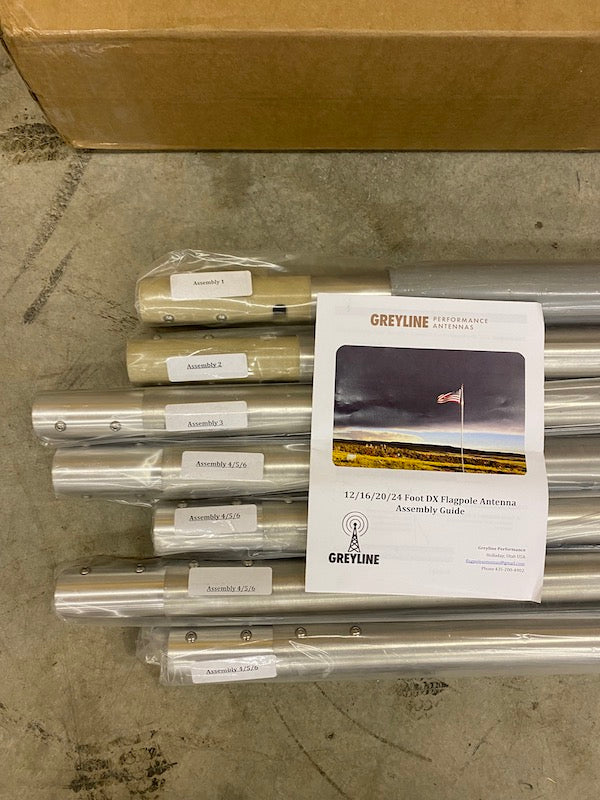
- 24' DXF Flagpole VDA Radiator
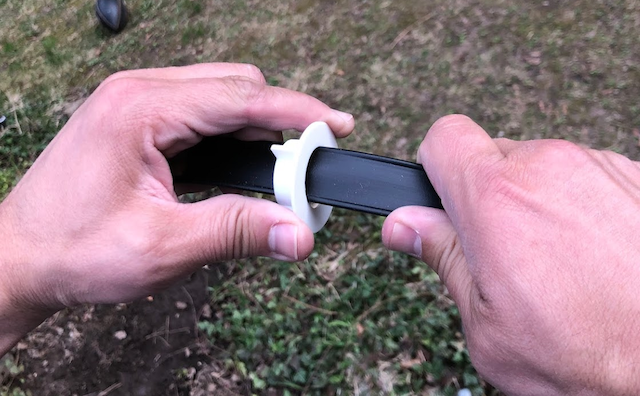
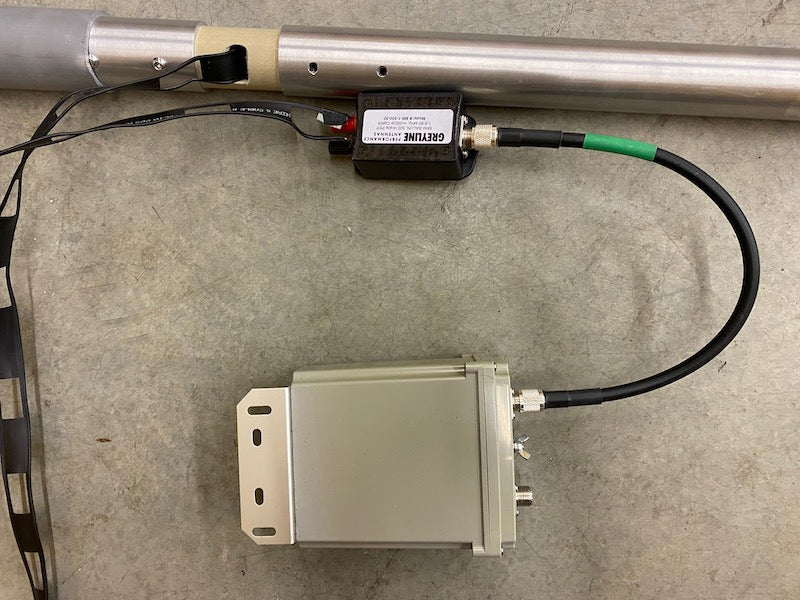
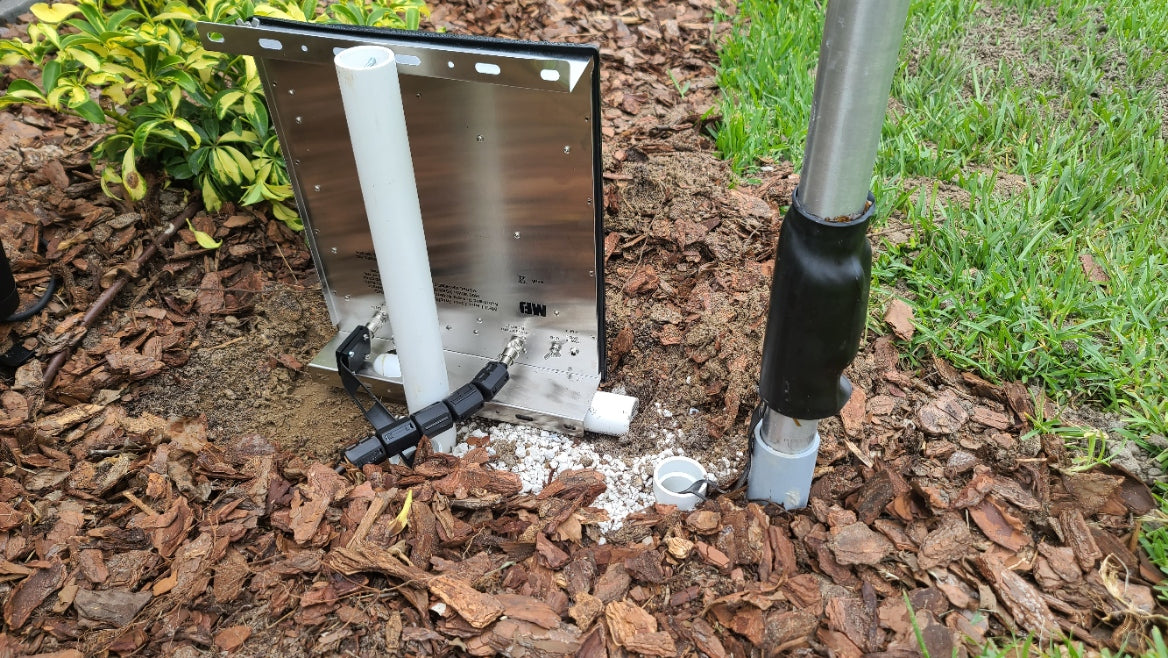
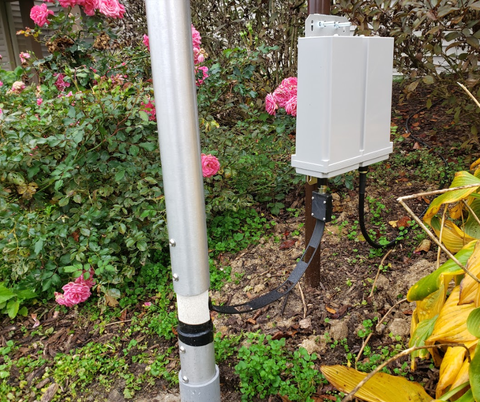
- Feedline kit: ladder line, five snap-on ferrites for choking, ladder-line to PL-259 adapter, spacers
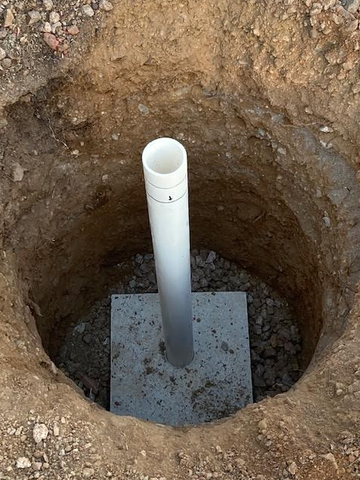
- Ground Sleeve Kit
- Assembly Manual and Tuning Guide
- USA-Made Flag Kit Hardware
- HOA Architectural Brief
- Property Integrity Letter (XYL and HOA ready)
- 7-Year Warranty
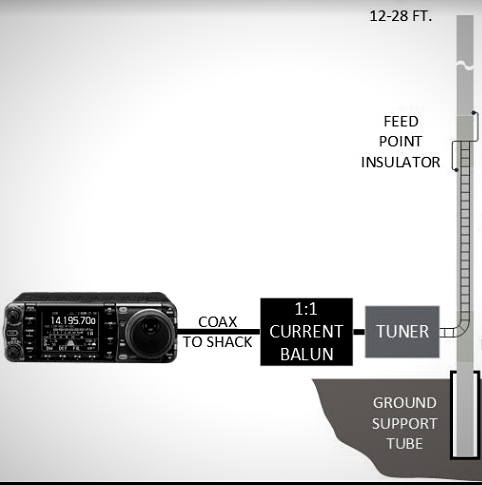
You supply coax for the run to your shack and a tuner, in the shack or at the antenna. Both are below. Add assembled coax to this cart and it's 10% off automatically.
Built for Real Weather
Every DXF is engineered to ASCE 7-10. The flag is the dominant wind load, which is why the two columns differ; stowing it returns the pole to its bare-vertical rating.
| Model | Flag Up | Flag Down |
|---|---|---|
| DXF12 | 100 MPH | 155 MPH |
| DXF16 | 75 MPH | 115 MPH |
| DXF20 | 60 MPH | 90 MPH |
| DXF24 | 50 MPH | 70 MPH |
| DXF28 | 35 MPH | 55 MPH |
Ratings per ASCE 7-10. Lower the flag when weather threatens. With the 9' whip, lower the whip too: the tilt-up base makes that a two-minute, one-person job.
A note on diameter, because it is widely misread: a thicker pole is not automatically a stronger one. Wind force scales with projected area, so a fatter pole carries more load and only comes out ahead when the whole section is engineered for it. The Greyline 2-inch 6061-T6 section is engineered for the load it carries; for exposed, windy sites there is the 28' HD on a heavy-duty 3-inch base. A wind rating without a cited standard is a guess dressed as a spec — ours are printed above.
Complete The Station
These come off automatically when they ride in the same cart as the antenna. No codes.
Tilt-Up Base — $25 Off
Two minutes, alone, no ladder. With a flag, a halyard, and a whip to service, this keeps it a one-person job for life. Fourteen seconds shows it →
View Tilt Base9' DX Whip — $25 Off
Nine more feet on top turns the DXF24 into a Skyline 33 — the classic 40-meter height, with bonus gain moving to 17 meters. The flag and whip fly together.
View WhipCoax Feedline — 10% Off
The 24-footer earns its signal; the wrong feedline gives it back as heat. Genuine Times Microwave LMR and Andrew Heliax hardline, cut, terminated, weatherproofed.
See The CoaxA Tuner, Shack or Antenna
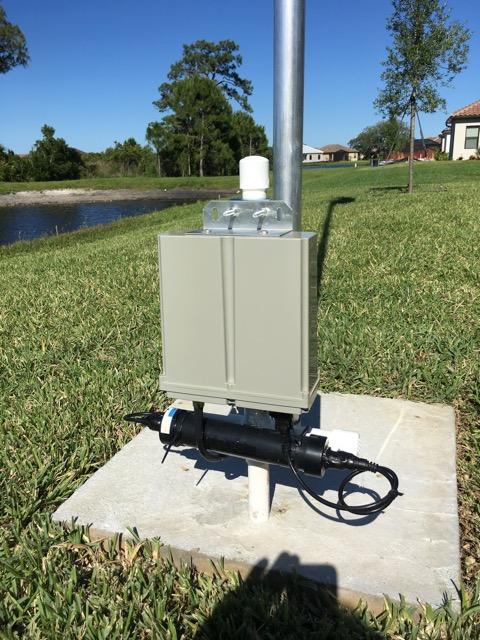
Both placements work, and almost any decent-size ATU will do. The LDG RT-100 remote is the easy, affordable starter — weatherproof, powered over the coax.
View The RT-1004' Extension
The smallest permanent step up: a 24-foot pole becomes 28 feet without a new antenna. Ships with the transition splice.
View Extension316 Marine Hardware
Salt air finds the fasteners first. For waterfront and coastal installs, the 316 kit is the grade for saltwater service.
View 316 KitNo flag needed? The DXV24 is the same antenna without flagpole hardware, and holds 70 MPH with nothing to lower.
HOA and XYL, Handled
Every DXF ships with an HOA Architectural Brief and a Property Integrity Letter, ready to print and submit. The board sees a flagpole, because that is what it is. See the approval kit →
Specs and Shipping
| Height | 24 feet |
| Bands | Every band, 160-6M; bonus gain across 30-10M (NEC) |
| Design | VDA — Vertical Dipole Antenna, off-center fed |
| Power | Legal limit — nothing in the antenna to heat. At full legal limit, use a feedpoint choke rated for 5 kW for headroom. |
| Radials | None |
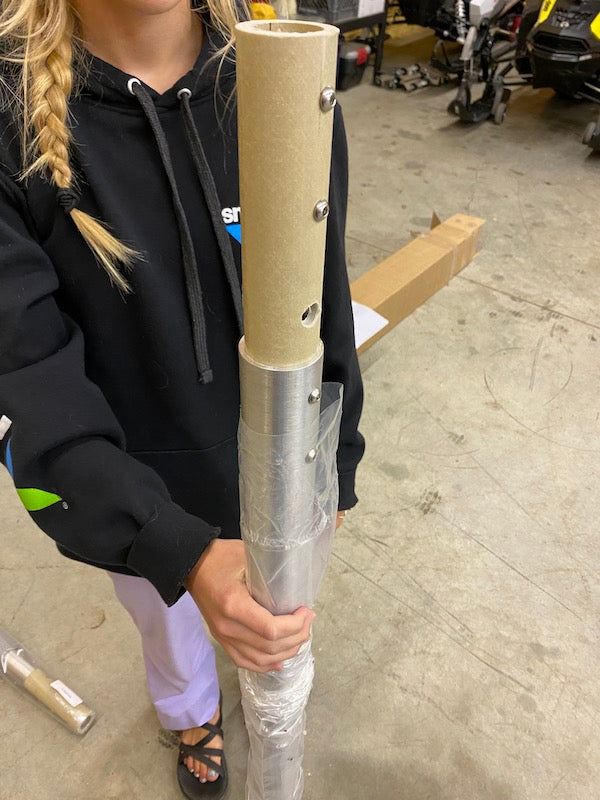
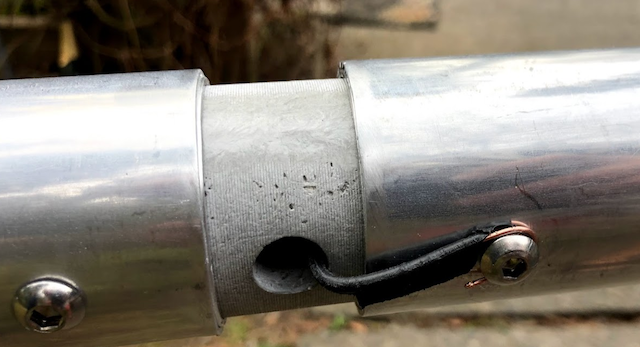
| Material | 2" 6061-T6 aluminum, fiberglass insulators, stainless hardware |
| Wind (flag up / down) | 50 / 70 MPH — ASCE 7-10 |
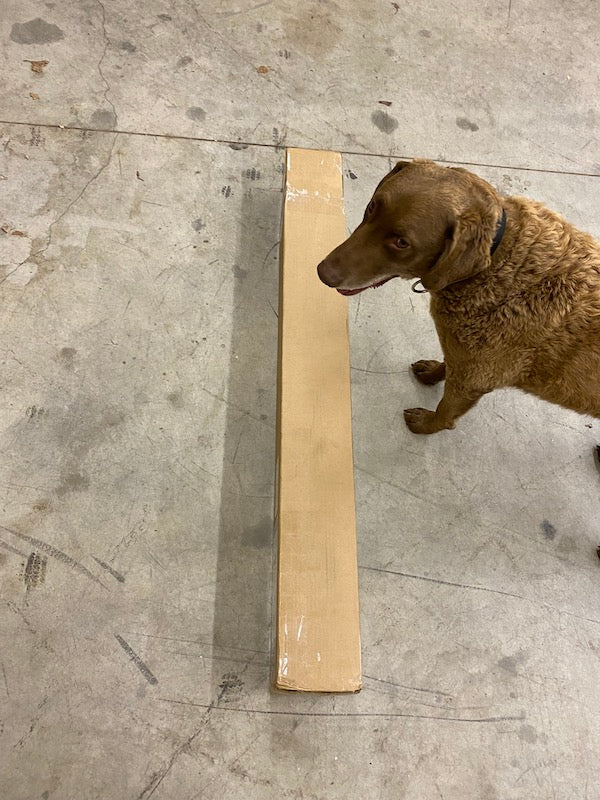
| Shipping | Within days, free to the USA and Canada; each box with its own tracking |
| Home | Designed and built in the Mountain West · KL2A and HQ in Sun Valley, Idaho |
| Warranty | 7 years. We improve the design whenever we learn a better way; this page is the current reference. |
Before You Order — Answered
When does it ship?
Within days, free to the USA and Canada, in more than one box with its own tracking. Call 435-200-4902 for a specific date.
Do I need a tuner — will my radio's internal tuner work?
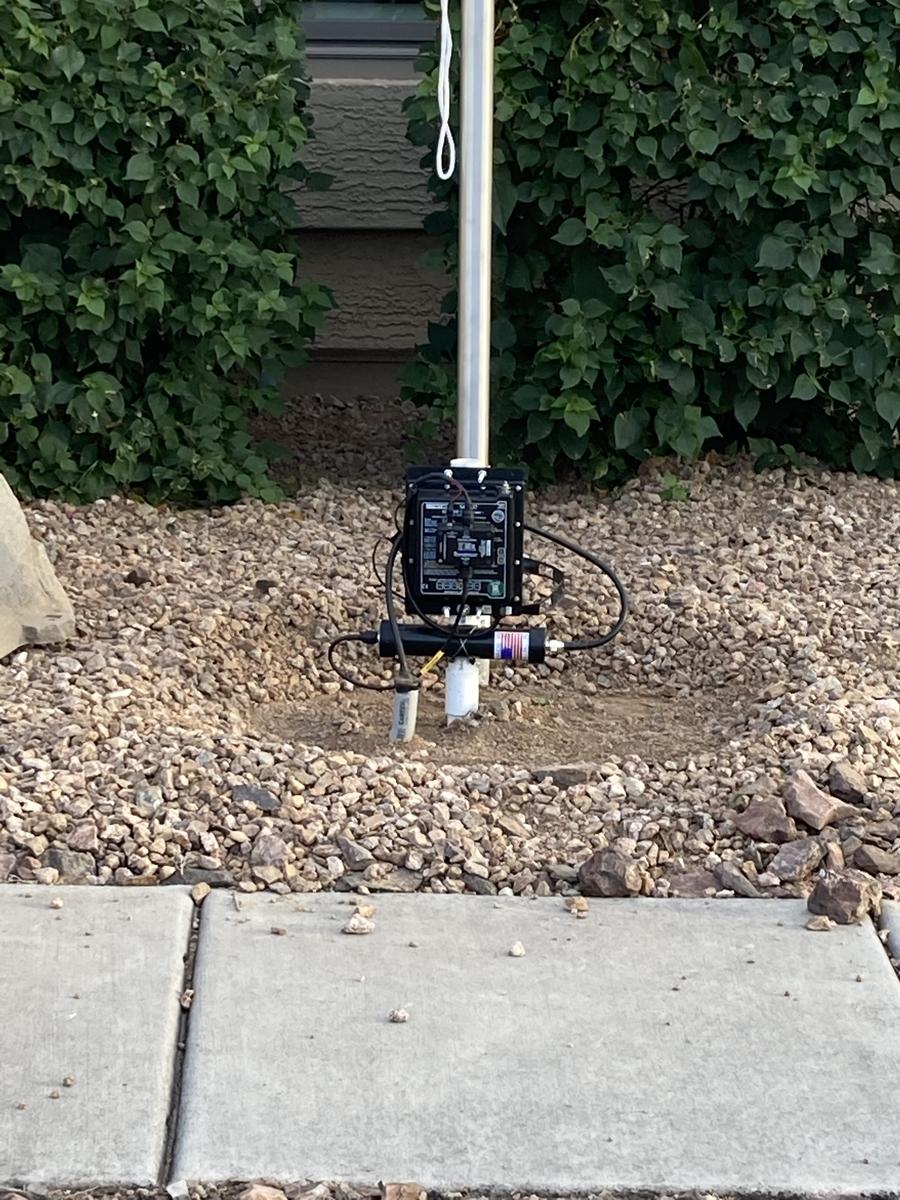
You need a wide-range tuner: the VDA presents a different impedance on each band, which is how it covers 160-6M with no traps and no radials, and most built-in tuners only handle about 3:1. In the shack or at the antenna, both work, and almost any decent-size ATU will do. For long digital runs, check your tuner's duty-cycle rating.
What coax should I run, and how long?
Measure radio to feedpoint and add about 15 percent for routing and a service loop. LMR-400 class is the sweet spot at HF; LMR-600 earns its premium past 100 feet, at legal limit, or buried. Assembled runs in 25, 50, 70 and 100 feet are 10% off in the same cart as the antenna.
How hard is installation?
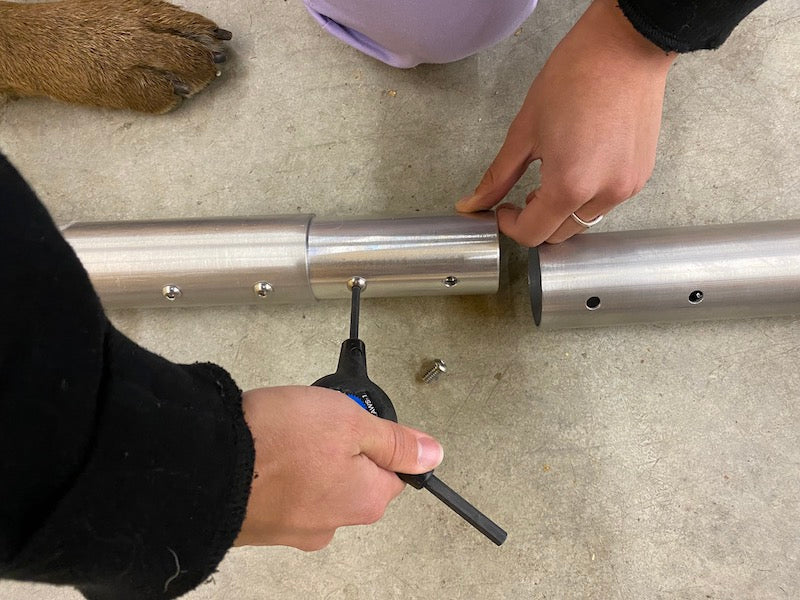
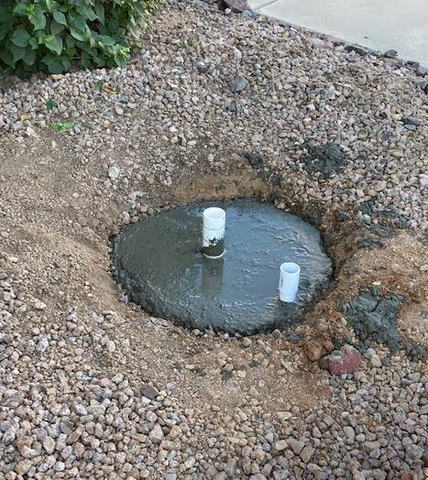
Most operators are on the air the same afternoon: dig a post hole, assemble the sections, drop it in, run coax, connect the tuner. Questions during install? Call 435-200-4902.
What does the 7-year warranty cover?
If it fails under normal operating conditions, we make it right. A customer's antenna fell in a severe ice storm — we sent a replacement immediately.
The DXF24 Ships Free to the USA and Canada.
Scroll up and add it to your cart — or call and talk it through first. We would rather you order the right height than the nearest one.
435-200-4902
Agency purchase? We accept POs, paid by card: CQ@greylineperformance.com
Ham Radio is fun again! Pass it on… 73, Jon KL2A · Greyline Performance · Sun Valley, Idaho