Greyline Flagpole Antennas in HOA Communities: Customer Highlights
Customer Installs · HOA Communities · Coast to Coast
Greyline Flagpole Antennas, On the Air in HOA Communities.
Two minutes of real installs. Smart, strong, elegant. Working DX from city lots, suburbs, and restricted communities.
An HOA rulebook does not have to end your radio career. Most covenants regulate visibility, not function. A flagpole that happens to be an antenna passes review on both counts.
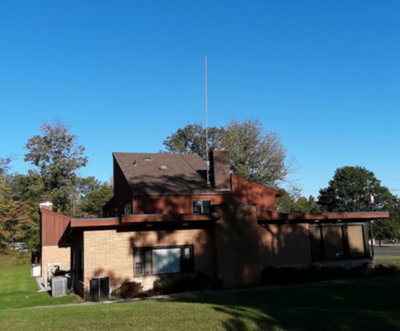
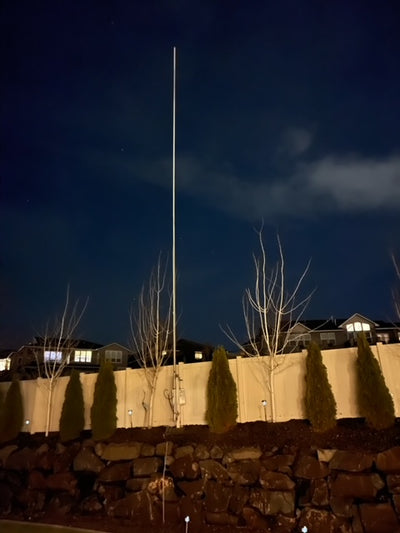
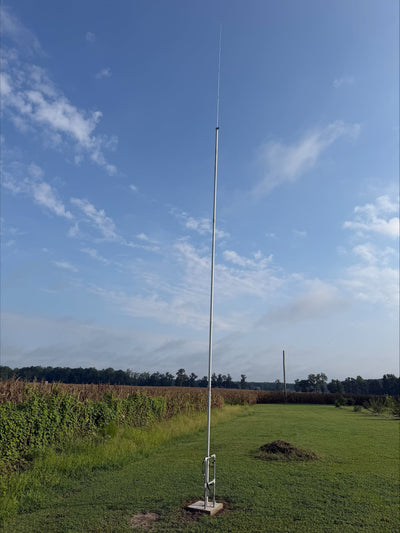
The video below is a short tour of Greyline installs across the country. Every antenna shown is doing two jobs at once: flying the flag and working the bands.
What You're Seeing
Real operators. Real installs. Homes with strict architectural review, neighborhoods with close lot lines, condos with small patios, rural properties with wide sky. The Greyline form factor — a clean anodized aluminum pole, a flag, no radial field on the lawn — settles into every one of them.
Built in the United States. Engineered to ASCE 7-10 wind standards (per-model ratings here). Covering 160–6M, WARC bands included.
The HOA Conversation
PRB-1, the FCC's regulation covering amateur antennas, means an HOA can regulate the placement and height of an antenna, but it cannot deny your right to operate outright. In practice, most boards approve a flagpole on sight. A visible flag and a quiet aluminum pole are architecturally welcome in ways a fan dipole in a tree is not.
If you would like help preparing an HOA submittal — photos, a cover letter, a spec sheet — our HOA Approval Hub covers it.
The Household Conversation
Many of our customers are licensed YLs — technical buyers who evaluate specs, measure signal reports, and place the order themselves. Many are households where the antenna is a shared decision, and both partners weigh in on how it looks, where it stands, and how it fits the property.
The Greyline is built for both conversations. The RF work is serious. The form factor is finished. Neither side of the household has to compromise on what the other cares about.
What Operators Are Saying
- “Real DX 160–6M at my HOA.”
- “Four-band DXCC in three months at my HOA.”
- “If I can hear it, I can work it.”
More at our Reviews page.
Why It Works at Your Place
A Greyline is a vertical dipole. The two halves of the radiator complete the circuit against each other, not through a buried radial field. That two-inch footprint is the whole footprint — not a starting point that expands underground. You pick the quietest spot on your property and you install there.
At ZF2B, the same design measured 10 dB louder than a full-size 5-element monoband Yagi on 10 meters — vertical at the ocean's edge, with an A/B switch and a video camera running. See the comparison.
Ready to Explore?
Start with the product pages, or call us. We answer the phone.
Ham radio is fun again. Pass it on.
Featured Reads
- Why Greyline — A Practical List of Benefits
- ZF2B: Verticals Louder Than a Full-Size 5-Element Yagi on 10M (Video)
- Tuner at the Base, or at the Desk? A Straight Answer.
- How Close Can You Install Near Buildings, Trees, and Your Home?
- KJ7CWQ: 16' DXF in a Phoenix HOA, 160–6M On the Air
- Ham Radio Adventure Stories — The Greyline Blog
Questions? We answer the phone.
Greyline Performance · Ph. 435-200-4902 · Contact
Smart. Strong. Elegant.
Read next · Getting Started
Greyline Life
How Greyline Works: The Clubhouse, The Bookshelf, The Tools, and You
Field Notes
Why Your Greyline Ships In Two Boxes
Operator Spotlight
W7TLG: Black Beauty on the Bench - An Engineer's Build
Everything on Getting Started →