Twelve Feet vs. Hurricane Milton: KC4OS Still Standing At 120 MPH

Signal Lab
Operator Spotlight
Naples, Florida. Bob Rysner, KC4OS, put his 12-foot DX Flagpole in the ground on October 9, 2024 -- the smallest antenna we make. He had days to enjoy it before Hurricane Milton made landfall just north of Naples and arrived to inspect the work.
Milton was no drill. Sustained winds just under 120 miles per hour moved through Bob's neighborhood -- the kind of weather that files insurance claims for a living. When the sky cleared, Bob walked outside and took inventory.

Why It Stood
Wind load is drag area times pressure, and pressure climbs with the square of wind speed -- 120 mph pushes roughly four times harder than 60 mph on the same structure. That square is what breaks things: doubling the wind quadruples the force.
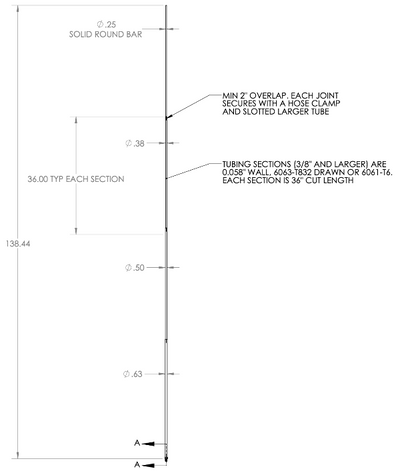
The Greyline gives that wind almost nothing to hold. Every antenna in the line is a uniform 2 inch OD from the ground to the tip -- no taper, no oversized base section -- a slim, constant profile with wall thickness sized for the bending moment at the ground, where the fight actually happens. This is ASCE 7-10 wind engineering, the same standard the county trusts for the structures it lets you live in, and it does its work in the dark. The only test that counts is the one the weather administers -- and every size in the line, twelve feet to twenty-eight, is built to the same standard that just graded out at 120.
The antenna physics never paused, either. As John Kraus, W8JK, lays out in Antennas, the conductor does not care about the weather -- geometry is geometry. A vertical dipole with both halves in the air needs no radials to complete the circuit, which also means there was nothing on the lawn for Milton to tear up. The HOA sees a flagpole. Milton saw a problem it could not solve.
The Build
Station: KC4OS, Naples, Florida
Antenna: 12' DX Flagpole -- the smallest in the Greyline line -- no radials, 160-6M coverage
Bands: 6 and 17 meters chased; 10, 15, 20, and 40 worked casually
Installed: October 9, 2024 -- days ahead of Hurricane Milton
Storm: Hurricane Milton, landfall just north of Naples, sustained winds just under 120 mph
Damage report: none. Still standing, still vertical, still an antenna.
What Bob Does Next
The 12 is growing. Bob owns the 4' extension -- sixteen feet is coming -- and his next move is the fold-over base, in his words for "ease of maintenance" and to lower the antenna when a Category 5 asks. That is storm country thinking like storm country: the antenna that survived Milton fixed in place gets even safer when it can bow.
Storm Country Reads This Twice
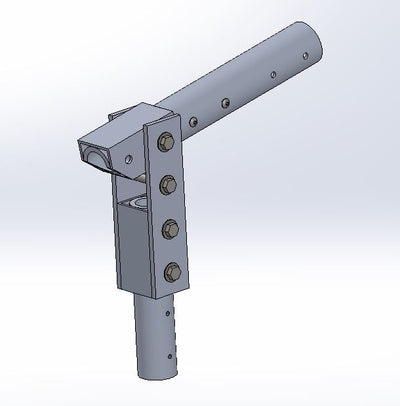
Bob's flagpole rode out Milton fixed in the ground -- that is the baseline. Operators who want the extra move add the Tilt-Up Base: lower the antenna before the weather, raise it after, one person and one bolt. It is also how you reach the top when the 4' extension or the 9' DX Whip goes on. One gets you up, the other gets you reach.
Get the Tilt-Up Base →
Add the 9' DX Whip →
See the 12' DX Flagpole -- the one that stood →
See the full DX Flagpole lineup →
More Operator Stories
Margie, KK7MGK: out-DXing her son from a 20-foot flagpole →
KQ4DEP: the one-man flagpole →
All Signal Report stories →
Every antenna we build is engineered, hand-built, and shipped from Sun Valley, Idaho -- and tested by whatever the sky sends. Thanks to Bob for the report and the photo. Naples grows them tough; so do we.
Ham Radio is fun again! Pass it on...
73,
Jon KL2A
Greyline Performance -- Sun Valley, Idaho
435-200-4902
Read next · Salt & Weather
Field Notes
The Stainless Swap: Clean, Grease, Snug, and the One Never
Field Notes
The Fall Checkup: Five Minutes That Save Your Winter
Operator Spotlight
Under The Aurora: Working The World From An Icelandic Shore
Everything on Salt & Weather →