No Radials Vertical Antenna: Two Kinds, Only One Works

Signal Lab · Counterpoise Physics
Two antennas share the words “no radials.” Only one of them earned it.
Somewhere right now, an experienced operator is reading “no radials required” and rolling his eyes. He has earned that eye-roll — he has seen the claim abused. But he is about to make a category mistake, and the authorities he would cite to dismiss the claim are the same authorities who explain why he is wrong about this one. Let us do this properly.
The phrase covers two completely different machines
The first kind is the end-fed “no-radial” vertical. Feed a vertical at its end against nothing, and physics does not waive the requirement for a return current — it just collects it somewhere undesirable. With no proper counterpoise, the antenna current returns on the outside of the coax shield. The feedline becomes part of the antenna. W8JI’s published work is scathing about this design, and rightly so: severe common-mode current makes the system extremely sensitive to mounting height, mounting structure, grounding, and — the tell — feedline length. This is why one operator swears by his end-fed vertical and his club-mate fights RF in the shack with the identical antenna. They did not buy different products. They got different feedline lengths.
The second kind is the vertical dipole. A dipole stood on end. It does not need radials for the same reason your horizontal dipole at 40 feet does not need radials: it was never a Marconi antenna in the first place. A quarter-wave ground-mounted vertical is half an antenna; the radial field is the other half, and skimping on it costs you in ground loss — the broadcast industry’s historic standard was 120 buried radials because the physics demanded it. A vertical dipole brings both halves of the antenna with it. The return current flows in the lower element, not on your coax shield and not through lossy dirt. The “missing half” is not missing.
And a word of respect for the third machine — the ground-mounted quarter-wave over a real radial field. Nothing in this article argues with it. Done properly, it is a proven performer; N6LF’s field measurements show exactly what each radial buys, and the broadcast industry ran the experiment at scale for a century. Its cost is not performance — its cost is labor and real estate: a radial field at 160 meters wants more lawn than most operators own. If you have the land and the knees, that antenna deserves its reputation. The question this article sorts is narrower: what can “no radials” honestly mean when the lawn is not on offer?
The Category Mistake
The skeptic’s criticism is correct — about the other antenna. Judging a vertical dipole by the failure modes of an end-fed vertical is like refusing a sailboat because canoes tip.
Do not take our word for it — that is the point
Here is what makes this more than a manufacturer’s plea. The ARRL’s own antenna literature draws exactly this line: the most efficient of the no-radial verticals are vertical dipoles — dipole antennas stood on end — and a vertical dipole can work quite well. The League’s “No Free Lunch” guidance goes further and says the quiet part out loud: steer clear of any vertical claiming great performance without radials — unless the antenna in question is a vertical dipole. The same body of published work that condemns the end-fed shortcut exempts the balanced vertical dipole, because they are different machines. W8JI’s critique and the ARRL’s exemption are not in tension. They are the same physics, applied honestly to two different designs.
So when you see “no radials” on a Greyline DX Flagpole or DX Vertical, the claim is not “we found a loophole in physics.” The claim is “this is a VDA — a vertical dipole antenna — with a balanced, choked feed, so the return current has a proper home.” That is also why the feed system matters as much as the aluminum: the common-mode choke is what keeps the feedline out of the antenna’s business. The full teaching lives in RF Mastery: The Physics of Balance.
Three questions that sort any “no radials” claim
Where does the return current go? If the answer is not “the other element,” it is your coax shield.
Does performance change with feedline length? A balanced antenna should not care; an end-fed system cares intensely, because the feedline is doing antenna duty.
Is there real common-mode isolation at the feedpoint? A design that needs the feedline to radiate cannot tolerate a proper choke; a design that is honest about its physics demands one. Ask those three questions of any vertical — ours included — and the marketing fog clears in under a minute.
The Authority Shelf
The published work this article stands on.
W8JI (Tom Rauch). The definitive published critique of end-fed “no-radial” verticals and common-mode feedline current.
The ARRL Antenna Book. The vertical chapters: radial-count data for ground-mounted designs, and the vertical-dipole exemption.
The ARRL, “No Free Lunch.” The League’s buyer’s warning on no-radial claims — and its explicit vertical-dipole exception, in the same breath.
N6LF (Rudy Severns). The definitive field measurements on radial systems and what they actually buy you.
We point, you verify: The Bookshelf We Read From →
From the Archives
The low-band operators worked this out in public.
The TopBand reflector holds decades of 160-meter operators arguing counterpoise, radials, and return currents with their results on the line. Search “radials” or “counterpoise” and bring coffee.
The antenna this article is actually about
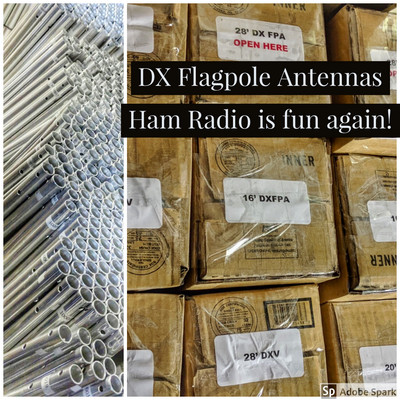
Every Greyline system is the second kind: a VDA with an elevated, balanced feedpoint and a common-mode choke in the box. The physics above is the whole reason the antenna can stand in a yard with a two-inch footprint and work 160 through 6 meters — no radial field, no buried copper, no apology.
The Greyline VDA
Both halves of the antenna, included.
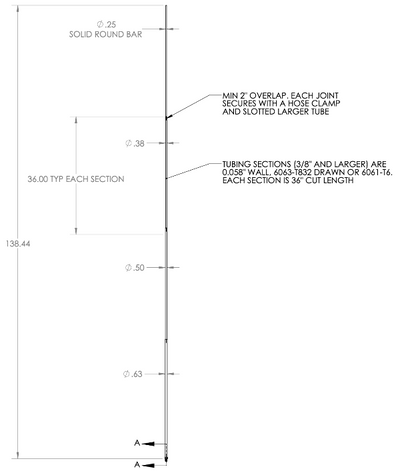
Balanced vertical dipole, elevated feedpoint, common-mode choke in every system. 12 to 28 feet, 160-6M on one feedline. Bare vertical for the rooftop or yard, or disguised as the nicest flagpole on the street.
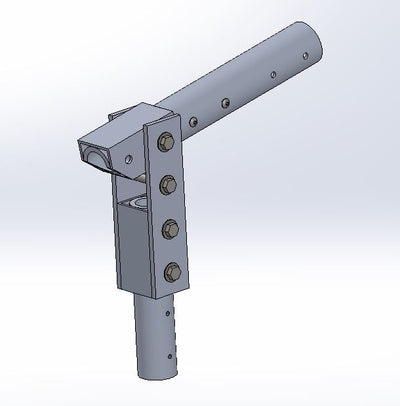
Two Ends Of One System. The 9' DX Whip on top adds aperture where every antenna is electrically shortest -- it wakes up 40 and 80 meters. The Tilt-Up Base at the bottom brings the antenna to working height, one person, one bolt -- and is how you reach the top to put the whip on. Weekend height, storm prep, and playing around with your antennas: it is how the bands get chased.
The Full System -- Signal Lab Curriculum
One antenna is a whole system: radiator, feedpoint, feedline, ground. The Lab covers every piece, and every piece points to the rest -- no stones unturned:
Aperture & Length: What Your Antenna Actually Grabs · Why Your Antenna Hates 80 Meters
The Feedpoint: Can I Use A 4:1? · Current Vs Voltage Balun
The Feedline: Feedline Loss Calculator · The Feed System
Ground & Radials: No Radials Means Two Things · Ground Is Two Jobs
“No radials” is not the claim. “Vertical dipole” is the claim. The radials were never going to be invited, because both halves of this antenna already showed up.

Designed and Hand-Built in Sun Valley, Idaho
73 — Jon, KL2A · 435-200-4902
Ham Radio is fun again! Pass it on...
Read next · Grounding & Lightning
Signal Lab
Three Grounds Walk Into A Shack: Lightning, RF, And The Bond Between Them
Signal Lab
Ground Is Two Jobs Wearing One Name
Everything on Grounding & Lightning →