N0CPO: 100 DXCC in 9 Months. 100W. 20ft Flagpole

Customer Spotlight · Operator Report
N0CPO: 100 DXCC Countries in 9 Months. From a 20-Foot HOA Flagpole.
Jeff (N0CPO) set an arbitrary goal: 100 DXCC entities in his first year on a new antenna. 100 watts. SSB only. Suburban Pennsylvania HOA. He hit the number in under 9 months.
No CW. No digital modes. No tower. Just a 20-foot Greyline DX Flagpole, an LDG RT-100 tuner at the base, and a Yaesu FT-710 in the shack.

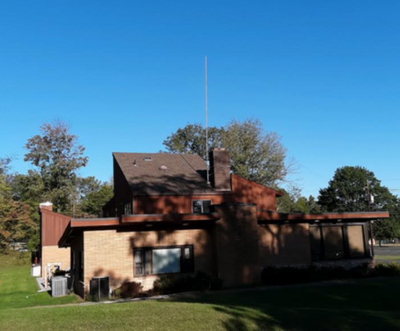
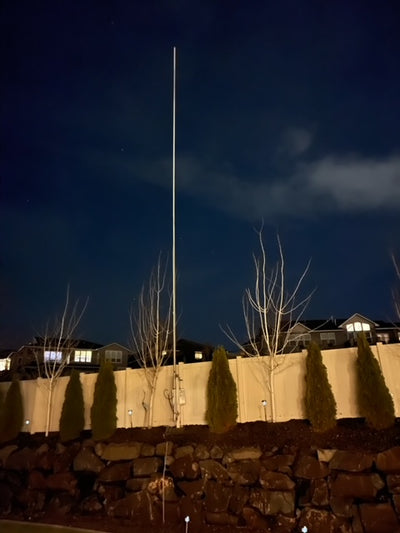
N0CPO Jeff's 20-foot DX Flagpole — suburban Pennsylvania installation, November 2024
In Jeff’s Own Words
“Jeff, N0CPO here. I installed my 20’ Greyline flagpole in November of ’24 and, after testing it out, I set an arbitrary goal of working 100 countries on 100 watts in the first year.”
“I figured that might be a high hurdle for a casual operator who only works phone — no CW and no digital modes. My setup is the flagpole, an LDG RT-100 tuner at the flagpole base, and a Yaesu FT-710. My QTH is in Pennsylvania.”
“I kept chipping away and chalking up countries until I hit the magic 100 — in less than 9 months. I’ve worked all states except Hawaii, all Canadian provinces, and 16 museum ships on MS Weekend.”
“I struggle sometimes to break through pileups of kilowatt stations, but I routinely get very good signal reports, from Kobe to Oman.”
“I’m sure having fun, and the XYL loves how the flagpole enhances the look of our home. 73 & good DX, N0CPO.”
What Made This Work
Three things stand out from Jeff’s station.
The antenna is honest about what it is. A 20-foot vertical dipole at suburban scale. No tower envy. No claim that it’s a Yagi in disguise. The 20-foot height puts the antenna at 5/8λ on 10 meters — the band that’s been opening throughout this part of Solar Cycle 25 — and provides usable performance across 160 through 6 meters with the ATU at the base.
The tuner is at the antenna. Remote-mounted LDG RT-100 keeps SWR at near 1:1 on the coax run back to the shack. The full 100 watts arrives at the feedpoint, not lost as heat in a mismatched line. About half of Greyline operators run shack-side ATUs — both topologies work — but Jeff’s remote configuration is the simplest path for a casual SSB operator who wants to set it once and chase DX.
The station is matched to the operator’s actual use. Jeff works phone. The Yaesu FT-710 is a clean SSB radio. 100 watts is enough to get heard on the bands Jeff is actually chasing DX on. There’s no aspirational gear here — no amp Jeff doesn’t need, no digital modes setup Jeff doesn’t use. The station serves the operator, not the other way around.
The Physics, Briefly
Jeff’s 20-foot Greyline radiates approximately 3.24 dBi of gain on 10 meters, with meaningful gain numbers on the other bands too. He’s likely feeling loud on 17 and 15 meters as well — the 20-foot length lands in the right part of the gain curve across the popular DX bands.
The low-angle radiation pattern of a properly designed vertical dipole is what gets 100 watts heard in Kobe and Oman. Horizontal antennas need significant height to achieve a low takeoff angle for DX. The Greyline flagpole delivers it naturally, from ground level, because the dipole is oriented vertically and the lower element handles return current without a buried radial field.
For the deeper read, we point operators to Robert Zavrel W7SX’s book Antenna Physics: An Introduction (ARRL, 2020). Bob is on our Authority Shelf for a reason. The ARRL has copies in stock.
See our full Authority Book Shelf →
Station Details
Operator: Jeff, N0CPO · Pennsylvania · Verified Owner
Antenna: Greyline 20’ DX Flagpole Antenna (DXF20)
Tuner: LDG RT-100 (remote at antenna base)
Transceiver: Yaesu FT-710
Power: 100 watts
Modes: SSB only (no CW, no digital)
Installed: November 2024
Results: 100+ DXCC entities in under 9 months · All states except Hawaii · All Canadian provinces · 16 museum ships on MS Weekend
What Jeff’s Story Proves
For the residential operator working out of an HOA-restricted lot, Jeff’s story is the evidence that a properly designed vertical dipole at suburban scale is enough antenna to chase DX seriously. 100 countries in 9 months isn’t an outlier — it’s what the physics predicts when the antenna is honest about what it is and the operator works the bands consistently.
For the EmComm operator or agency reader, the same station configuration — a 20-foot vertical dipole, remote ATU, 100 watts — is a deployable HF infrastructure baseline. Jeff’s SSB-only contact pattern would translate directly to voice net operations during an emergency. Same antenna, same physics, different mission framing.
For the downsizing operator coming off a tower or a Yagi, the gain trade-off is real but smaller than you might expect — and the operational simplicity is enormous. No rotor. No bearings. No climbing. No insurance complications. One antenna that covers 160 through 6 meters from a single feedpoint.
More from The Signal Report
Low-Band DX Primer — Your Guide to 40-160M Success →
K3WA Works 160M Contests from HOA on 24’ Flagpole →
ZF2B — Verticals Louder Than a 5-Element Yagi on 10M →
Remote vs Shack Tuner — Which Setup Is Right? →
Antenna Selection Guide — Which Greyline Is Right for You? →
What Is a VDA? The Physics Explained →
73 Greyline Performance — 435-200-4902
Ham Radio is fun again! Pass it on…
Read next · Propagation
Operator Spotlight
Under The Aurora: Working The World From An Icelandic Shore
Signal Lab
What Is the Greyline? The Twilight Band That Carries DX
Signal Lab
The Sun Had a Weekend. The Bands Are Waking Up