W3GF: Seven Years, Three Hurricanes, 20 Countries on 6M
Home › Field Reports › W3GF

Field Report — Florida — Seven Years On
Seven Years, Three Hurricanes, and 20 Countries on Six Meters
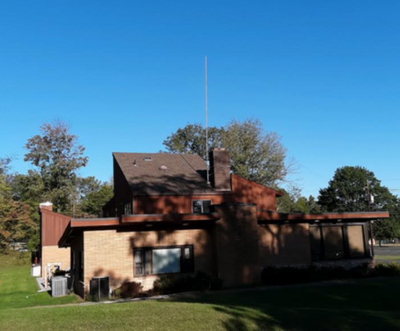
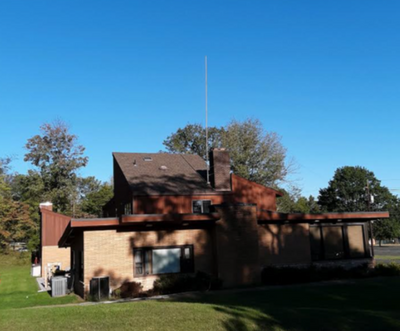
Craig W3GF put a 20-foot Greyline vertical in the Florida ground in 2019. We heard from him again in 2026. The antenna is still standing, the numbers got better, and the maintenance log fits in one sentence.

2019: The First Season
Craig replaced a quarter-wave trap vertical with a 20-foot Greyline OCF vertical — the DXV, our bare vertical, no flag. At install he added a 4-foot stainless whip on top at our suggestion. Running 100 watts from a TS-890 into a band-poor stretch of the solar cycle, he wrote to tell us how it was going.
In His Words — October 2019
With a little tweaking of the installation, I now have matches of no greater than 1.8 to 1, 75M thru 6M.
Even with the poor band conditions we are currently experiencing, I have worked some nice DX — Albania, Peru, Ecuador, Brazil, Italy, Spain and most other European countries with great reports on 100 watts from the TS-890. In short, if I can hear them, I can work them even through some serious pileups.
I am particularly impressed — and surprised — with 6M performance.
I forgot to mention that my noise level is also several S-units lower than with my former 1/4 wave trap vertical, which makes a real difference.
2026: Seven Years Later
Craig wrote again this summer. Same antenna, same yard, three hurricanes in between.
In His Words — July 2026
Nearly 7 years later the OCF is still standing proud after 3 hurricanes and numerous other Florida storms.
Better than 1.5/1 on all bands 80 thru 6M including WARC. 1.04/1 on 6.
To date I have worked at least 20 countries on 6M using the OCF, best DX being Fiji, Canaries, Portugal and Falklands, running 30 watts on FT-8.
The antenna has required little maintenance other than periodic tightening of feedpoint screws and other fasteners. I could not be more satisfied with the antenna’s performance after all these years.
October 2026 update: 187 countries in the log, on 35 watts. The whole story, in Craig's words from 2019 and today: 187 Countries on 35 Watts →
7
Years standing
3
Hurricanes survived
187
Countries, 35 watts
What Craig’s Seven Years Actually Teach
The noise floor is the headline, not the SWR
Craig came off a quarter-wave trap vertical and reported his noise level dropped several S-units. That is not a small difference — that is the difference between hearing a station and not. The reason is structural. A ground-mounted vertical works against a radial field, and that field is a network of wires lying across your property collecting everything your neighborhood radiates. A vertical dipole has no radial field, no ground rod, and no counterpoise. There is nothing in the dirt to pick up trash. Operators notice the quiet before they notice anything else.
Six meters is not an afterthought
Twenty-plus countries at 30 watts on FT8 — Fiji, the Canaries, Portugal, the Falklands — from a 20-foot HF vertical. Most operators assume six needs its own antenna. Craig’s log says otherwise, and his 1.04:1 match up there says why: the antenna is a genuine radiator at 50 MHz, not a compromise that happens to accept power.
The whip earns its place
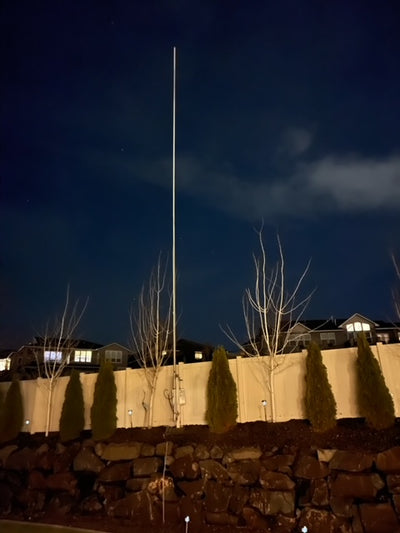
Craig added a 4-foot stainless whip at installation. Seven years on, his match improved from 1.8:1 across the range to better than 1.5:1 on every band including WARC. More radiator up top flattens the picture, particularly down low. In September 2026 he went further and put our 9-foot DX Whip on top — the antenna in the photo above.
The maintenance log, complete: periodic tightening of feedpoint screws and other fasteners. Seven years, three hurricanes, one sentence. That is what an aluminum antenna with no traps, no coils, and no moving parts asks of you.
From the Masters
Craig’s noise observation is not an anecdote — it is the predictable consequence of removing a ground system. The physics of radial fields, common-mode current, and what a receiving antenna actually picks up is documented by the operators we build on: Zavrel, Kraus, and Brown among them.
A Note From Greyline
We want to draw attention to the least glamorous line in Craig’s letter, because it is the one that matters most seven years out: he periodically tightens the feedpoint screws and fasteners.
That is the whole maintenance program, and it is worth doing deliberately. Antenna grease (Noalox) on every aluminum mating face and bolt shank keeps the junctions electrically clean and corrosion-free. Threadlocker — Loctite Blue, never Red — belongs on the threads of the lower-section bolts where wind flexing concentrates its stress. Red is the permanent grade and takes a torch to release; it turns a season check into a blowtorch project. The full walkthrough is in our assembly documents.
Your Next Moves
Care for your connections
Noalox, Loctite Blue, and the seasonal check that keeps an antenna standing for seven years.
Assembly Documents →Model your own configuration
Gain by band, with and without the whip. Run your numbers rather than take ours.
VDA Optimizer →More operators, more logs
Field reports from HOA neighborhoods, open country, and everywhere between.
Field Reports →More Operator Stories
K8AQM: 76 QSOs and 29 states on 160 meters, from 20 feet →
K3WA: a clean sweep in CW Sweepstakes, all 84 sections →
WC0R: an aerospace engineer runs the numbers →
Seven years is a long test.
Every Greyline is designed and built in the Mountain West; KL2A and headquarters in Sun Valley, Idaho. 160 through 6 meters, no radials, no ground system, nothing in the dirt.
73, Jon KL2A — Greyline Performance — Sun Valley, Idaho — 435-200-4902
Ham Radio is fun again! Pass it on.
Read next · HOA
Operator Spotlight
Florida Is Being Heard Again
187 Countries on 35 Watts: Craig W3GF, Seven Years on a 20-Foot Vertical
Operator Spotlight
Two Weeks of Voicemails, Then This: W3GF's 20-Footer and the Whip in a Florida HOA